
Built a customer education ecosystem that increased activation rates.
Challenge
Stack Sports is a fast-growing SaaS company serving youth sports organizations, with Sports Connect as its flagship product. While sales continued to grow, activation rates weren’t keeping pace, especially among smaller, self-service customers.
Enterprise customers who received 1:1 onboarding consistently activated and adopted the product. Smaller organizations, many of them volunteer-led, often struggled to get started. That early friction slowed time to value and made long-term success harder to achieve, often resulting in churn.
Approach
I led a cross-functional research effort across Customer Success, Support, Product, and Sales to understand why some customers moved quickly to activation while others stalled. I reviewed activation data, CSAT and NPS feedback, product usage trends, and the sales-to-onboarding handoff.
Four insights stood out:
- Educational content lived in too many places, owned by different teams, which created an inconsistent experience for customers.
- Nearly 90% of our users were volunteers. They weren’t typical SaaS users motivated by career outcomes. They were supporting their children’s sports organizations, often short on time, and frequently affected by organizational turnover.
- In-app guidance existed, but it was delivered based on time and sessions rather than customer progress, which caused confusion about next steps.
- When customers didn’t take action early in onboarding, momentum dropped quickly and re-engagement required significantly more effort.
Solution
To address this, leadership expanded my team to own customer education across the lifecycle, including onboarding, live training, self-service learning, and in-product guidance. This allowed us to consolidate how education was designed and delivered, creating a more consistent, intentional experience from activation through long-term adoption.
Double-Down on Self-Service Content
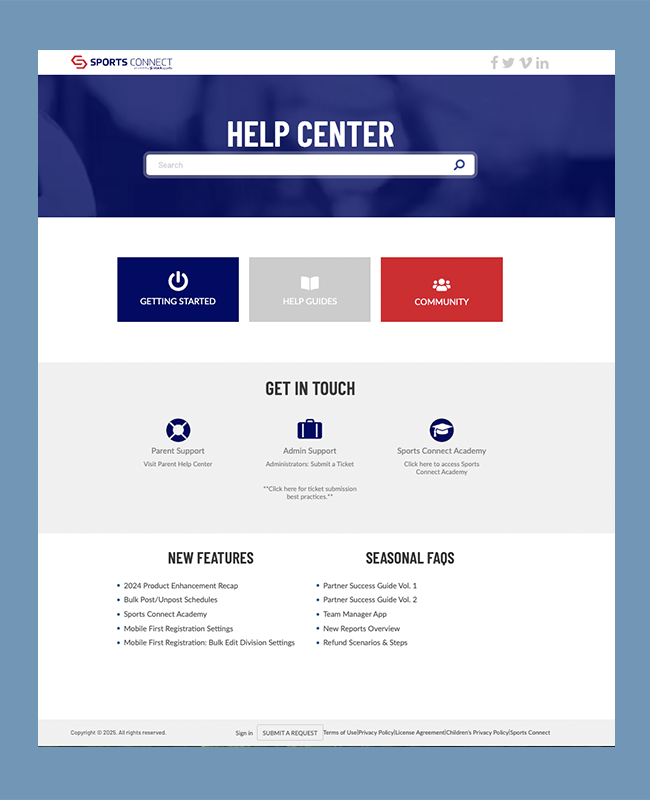
We started with the Help Center, partnering closely with Support, Success, Product, and Sales to audit and rebuild the content. Outdated materials were removed, gaps were filled, and resources were reorganized around common customer questions and onboarding milestones. Content was delivered through clear checklists, step-by-step guides, short videos, and FAQs aligned to each stage of the journey.
More Flexible, Human Training Options
Webinars were already part of our strategy, but attendance was inconsistent. To better support volunteer-led organizations across time zones, we made all sessions available on-demand and introduced live office hours. This gave customers flexibility while still providing access to real people when they needed help.
Sports Connect Academy
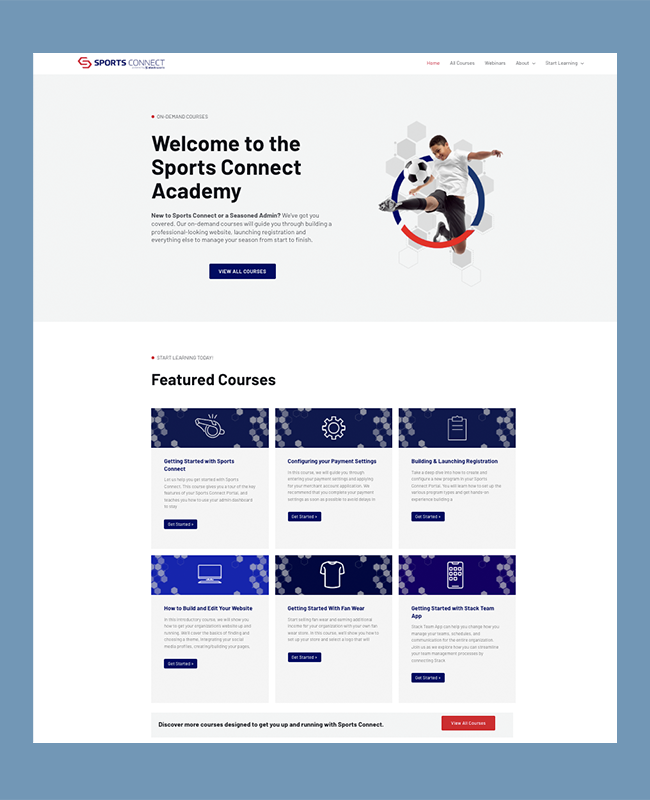
We launched Sports Connect Academy, a free, on-demand learning platform with structured courses and learning paths to help customers solve problems independently and to deepen their product knowledge over time. I led the effort end to end, from concept and LMS setup to course design and launch, creating a scalable program that drives long-term customer success and product adoption.
Meeting Customers Where They Are
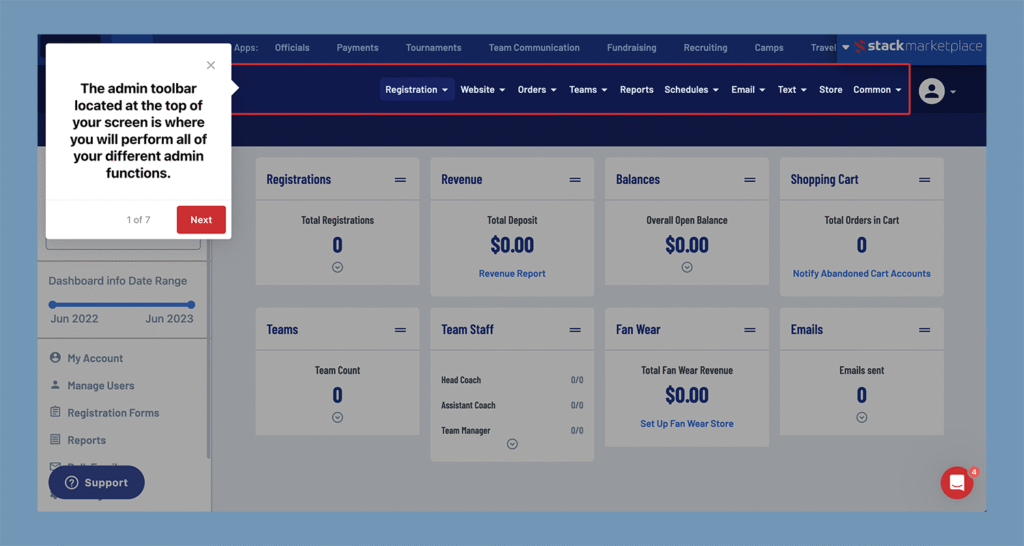
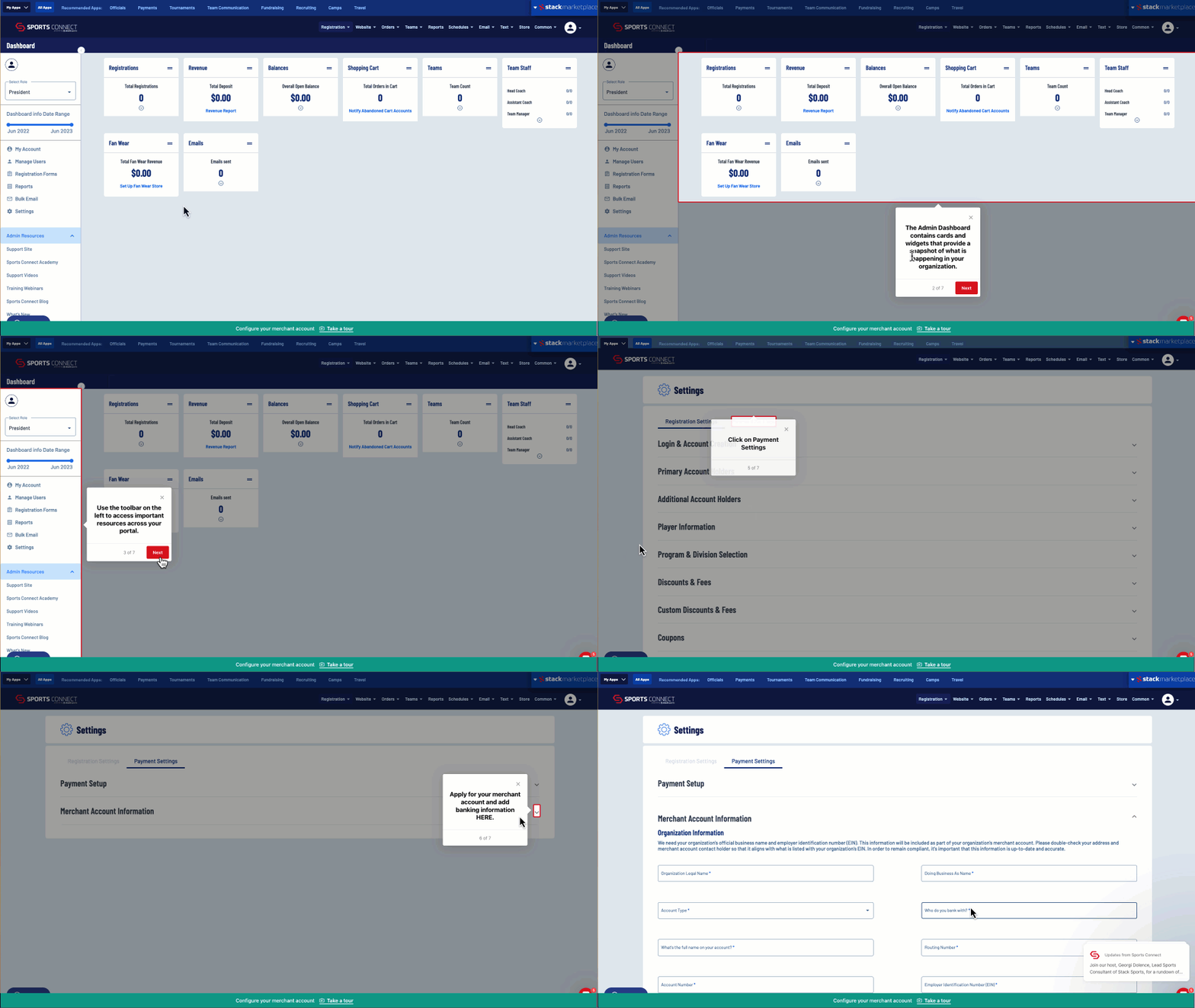
We shifted digital adoption from a time-based model to a milestone-based, product-led approach. Using product usage data, we defined clear activation and adoption milestones and delivered in-app guidance when it was relevant.
People Power
When automation wasn’t enough, people stepped in. Alerts notified the onboarding team when customers slowed or stopped progressing, allowing us to intervene early with personalized outreach and 1:1 support before momentum was lost.
Results
This push–pull education model combined proactive guidance with on-demand learning to support customers throughout their journey.
Within 18 months:
- Activation increased 23% across all customers, positively impacting ARR.
- Activation increased 30% among self-service customers.
- Customers reached value faster with less reliance on manual, 1:1 support.
By aligning education with customer intent and delivering it when it actually mattered, we embedded learning into the customer journey and created a more scalable foundation for adoption, retention, and long-term success.